
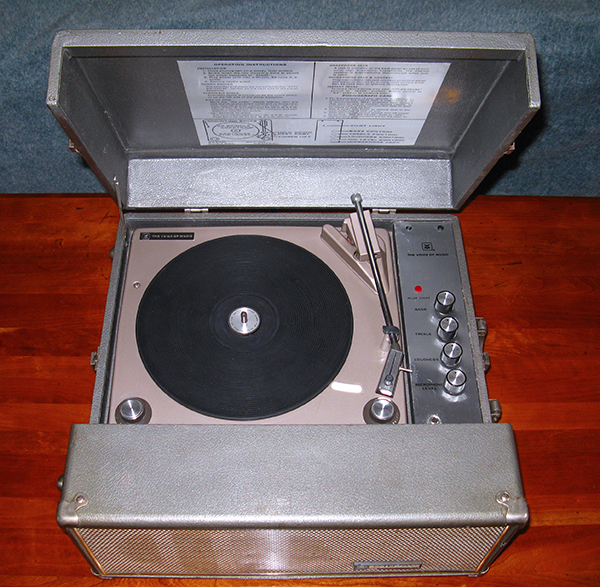
The original tracking force for record players such as this is somewhere between 5 and 7 grams which is quite heavy and will wear out records at an accelerated rate. In order to get this record player to work with a magnetic cartridge the tonearm needed to be modified. The weight on the backend of the tonearm is used as a counterweight against the weight of the replacement cartridge. Also, the original spring that originally counter-acted against the weight of the cartridge broke and the replacement isn't exact.
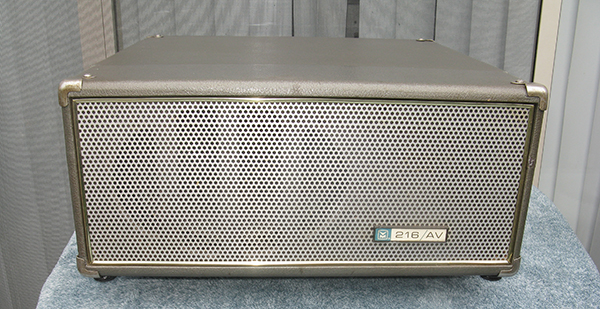
Behind the aluminum grill is a modern replacement speaker that is better than the original in most respects. It tends to get a little more bass response when the lid is closed rather than open.
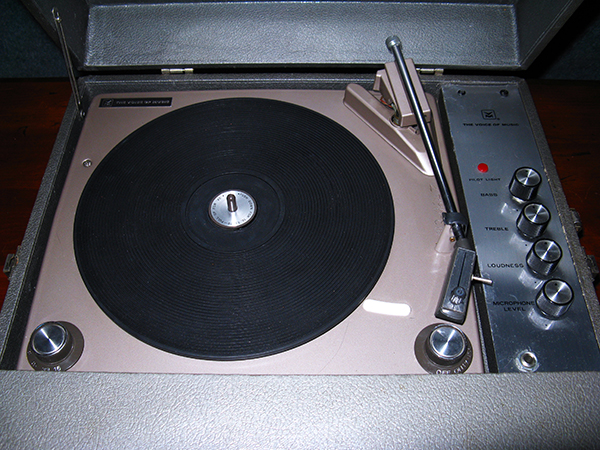
On top of the headshell is a 0.4 gram plastic weight in order for the unit to track at 3.1 grams instead of 2.7 grams. It was attached with synthetic rubber and can be pulled right off along with all of the rubber. Without it some records will skip at least once during play. It is imperative that the unit be level and that records are clean without any heavy scratches to avoid tracking issues.
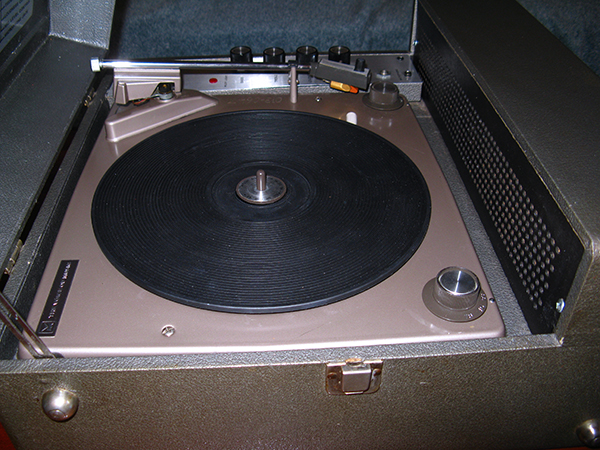
The knob seen at the front of the photo is for changing the speed. Towards the left is a screw for locking the suspension and there is another one on the other side underneath the tonearm head. When transporting the unit unscrew (counterclockwise) both of these screws until the platter doesn't float. Conversely, screw both in completely (clockwise) so that the platter will have a bouncy feel to it. On the opposite end is the On/Off/Pause knob. All functions work properly. The rubber platter mat is in excellent condition and has been treated with a rubber revitalizer.
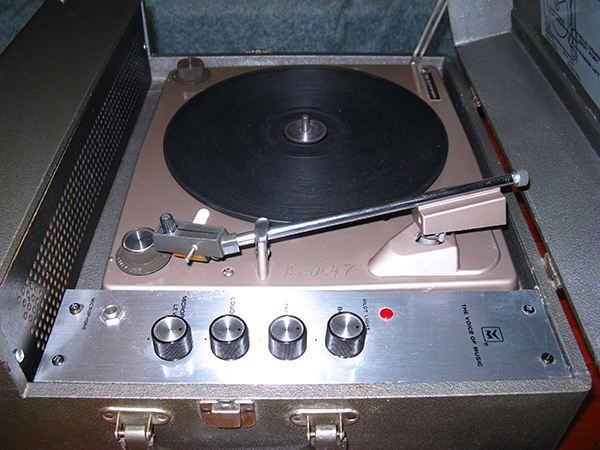
Underneath the tonearm a serial number is inscribed. Very common for schools to do this to keep track of their equipment. The microphone jack seen to the left also has a volume control and works whether a record is playing or not. In order to use the built in 45 adapter just pull on the post in the center of the turntable, otherwise; push it in to play other types of records. Can be pulled off completely if pulled from the edges upward. The platter will lift up after the circular retaining ring is removed. Not an easy task to accomplish.
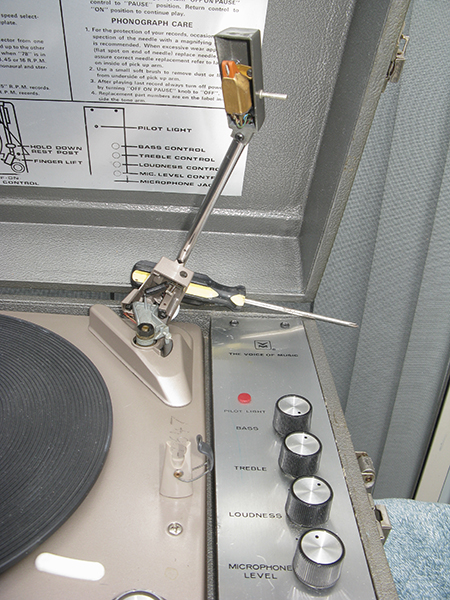
Underside of tonearm reveals an Empire 888 cartridge and new spring. The stylus has been cleaned and tracks at 3.1 grams. This will be a lot easier on the records played. The tracking for this cartridge is 0.75 grams to 6.0 grams. The adjustment for this spring is difficult, but can be adjusted with a pair of needle nose pliers instead of a flat head screwdriver like it should. How often do you need to adjust the counterweight anyways?
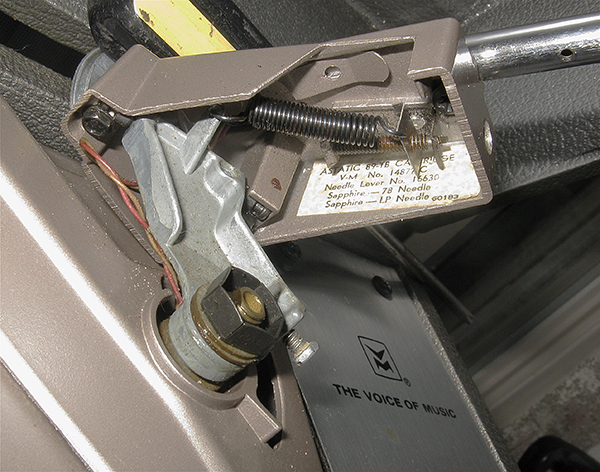
The original Astatic cermamic cartridge has a dual sapphire needle, one for LP's and 45's and the other for 78's. Sapphires wear out quickly when compared to the diamond stylus on this unit now.
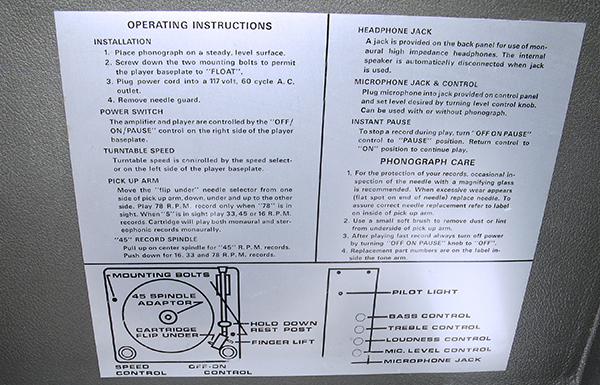
The original instructions has been re-glued in all places as needed.
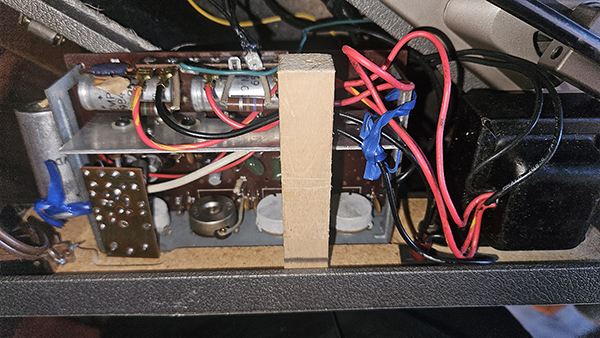
The amplifier is rather simple and all of the electrolytics are within specifications. All of the potentiometers have been cleaned to eliminate static when operating them.
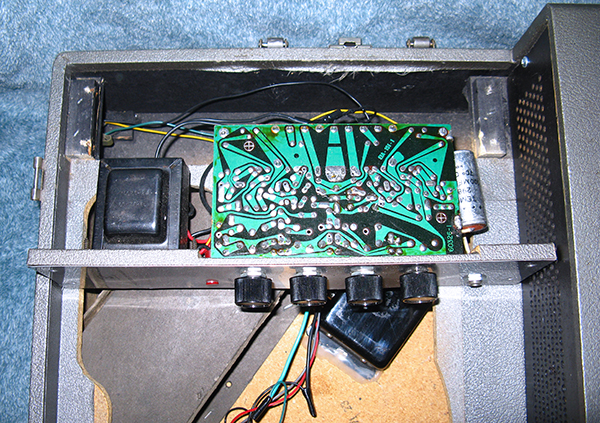
Backside of the main circuit board reveals nothing other than someone has worked on it before.
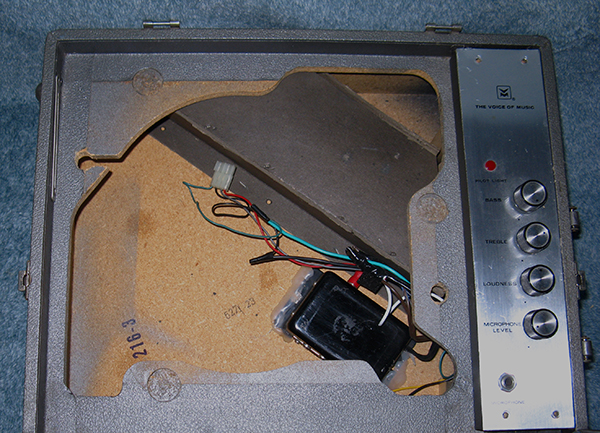
Below the amplifier is an active phono preamp to accomodate the magentic cartridge. It is tied in to the switched A/C line and draws about 40 milli-amps. Also seen here is the white Molex connector that attaches to the switch that sits under the back of the tonearm.
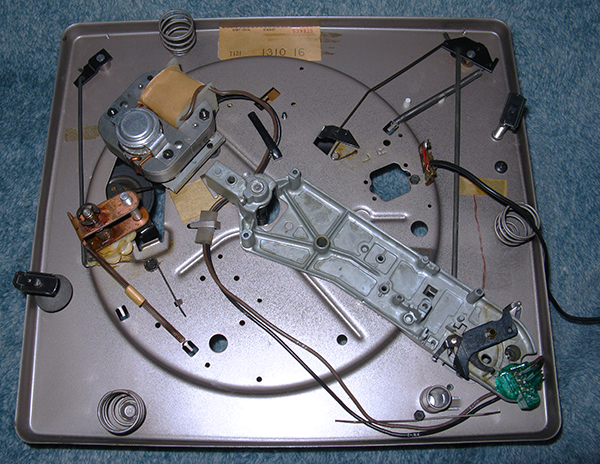
The green plastic piece seen here on the lower right hand side is the actual switch for the unit. It has 4 connectors that attach to the white Molex connector (pictured previously). The first connection (brown) on the upper most side is a pass through for the motor (red on the Molex side) and the next going down is the other lead (black) going to the motor. On the Molex side of the connector (gray) aligned with the black motor wire is another line that needs A/C. The third connector is A/C power comes from the Molex connector (black) side and connects to the previous connector when switched on. The final connection to the far right is a ground whose metal post is actually part of the frame that attaches to the green lead on the Molex connector which is attached to the power cord ground.
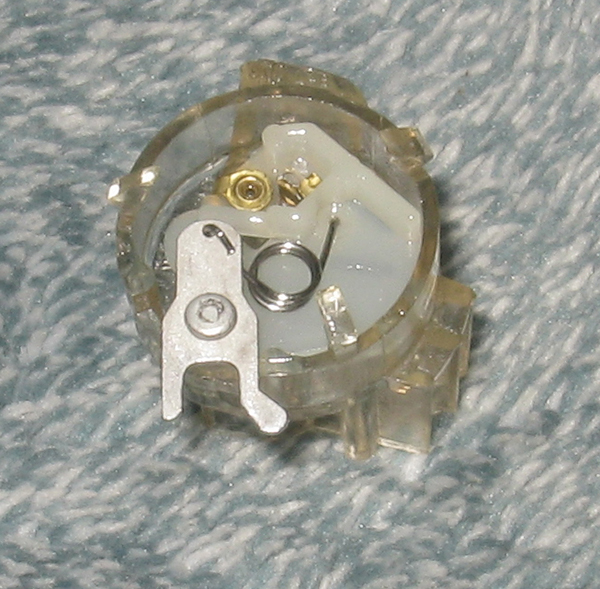
A replacement switch from another unit which appears to work, but electrically does not.
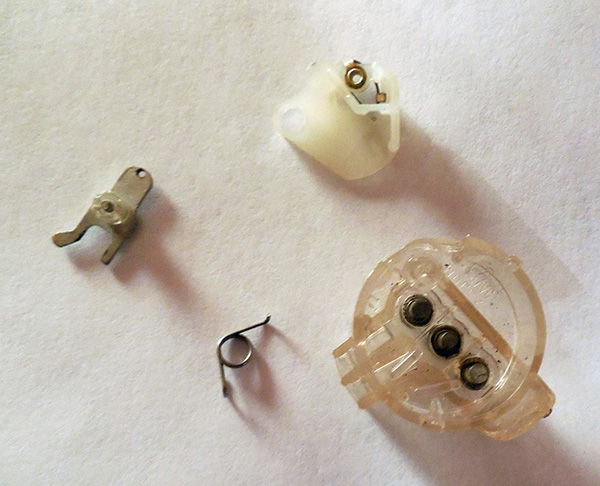
This the an image that was sent to UserX by Voice of Music Enthusiasts. They state in order to get another rebuilt switch all of the mechanical pieces need to be intact with the exception of the outer shell.
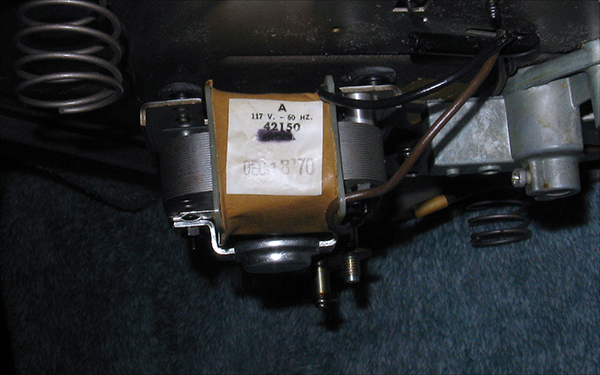
The date on the motor reads Dec 18 '70 which makes this unit a probable 1971 unit.
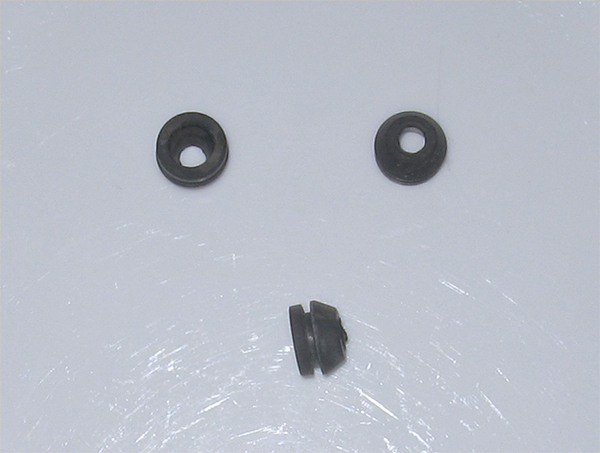
These are the rubber motor mounts that add suspension for the motor. If any one of these is worn down the speed of the turntable will change. These happen to be in excellent shape and have been conditioned with a rubber revitalizer.
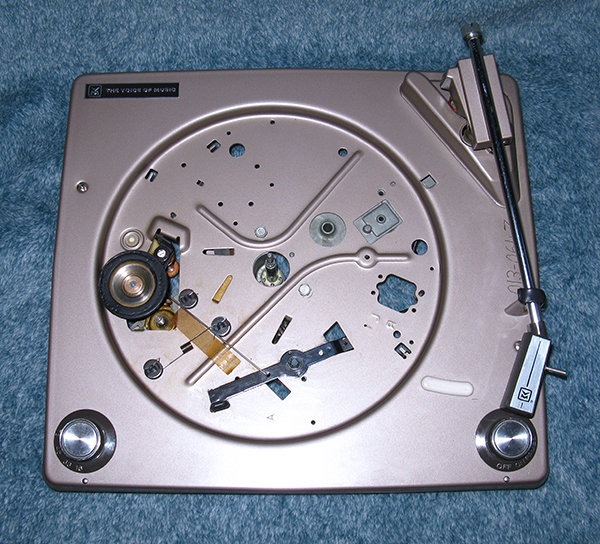
The idler wheel seen here is also in excellent shape and has been conditioned with a rubber revitalizer and lightly re-vulcanized to keep the turntable from running too fast. On the other hand, there is a very thin washer additionally added in order correct speed issues. There is a spring that attaches between 2 of the motor mounts. The schematics for this player has the end of the spring attached fartherest right attached to the motor mount closest to the idler. In either case it appears that either configuration serves the same purpose ... whatever that is.
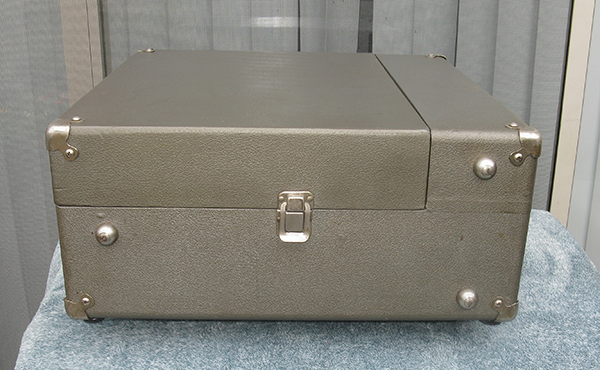
All of the metal exterior hardware has been polished. The rounded feet seen here are opposite of the carry handle so the unit does not have to sit flat when not in use.
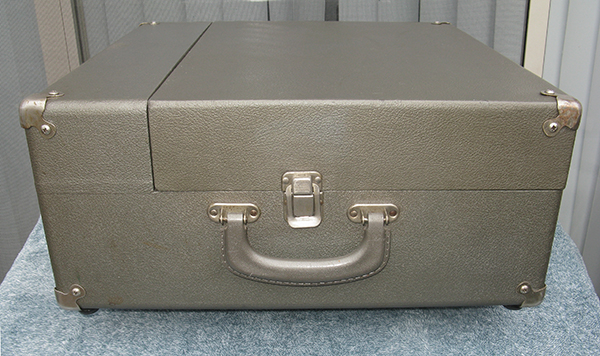
Some of the nickel plating on the exterior hardware is starting to wear off. Could be electro-plated, but seems overkill for a unit such as this.
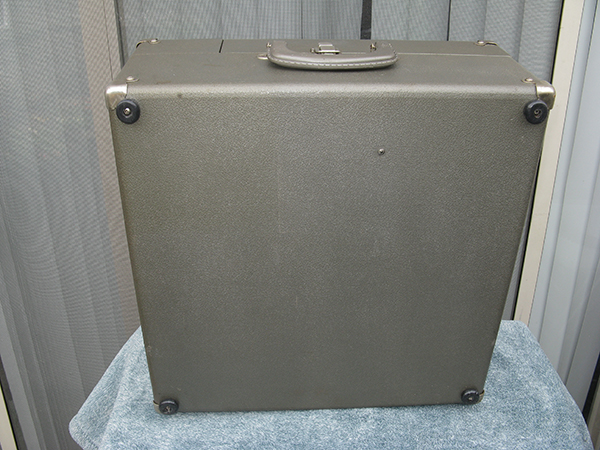
The rubber feet are cracked in several places and have been re-vulcanized. The screw seen on the bottom of the unit holds the amplifier in place. On the interior of the unit is a screw that sticks out that has been taped and the power cord is attched to it to keep it secure.
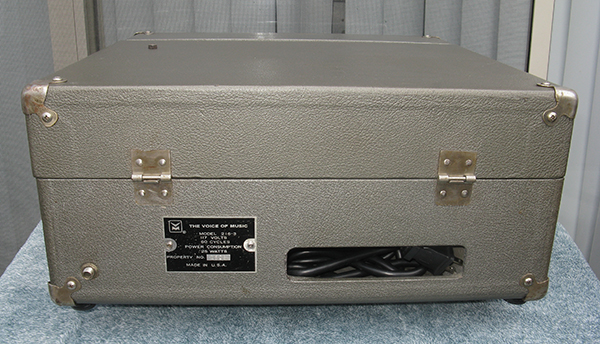
There is a mono headphone jack that works but would need an adapter to convert more modern stereo headphones into mono. The manual states that this jack is intended for high impedance headphones. High impedance starts around 100 Ohms and most modern headphones are less than that. An impedance adapter would be required.
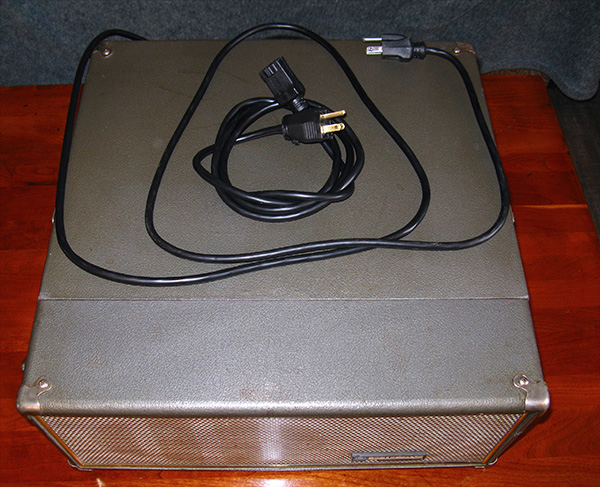
The cord is a new replacement to the previous replacement cord and is 7 feet long. It has a ground which connects to the ground on the switch. Helped eliminate some buzz in the amplifier. Also included is an extension cord which is 6 feet long. Won't fit where the power cord goes, but can be placed where the turntable resides.
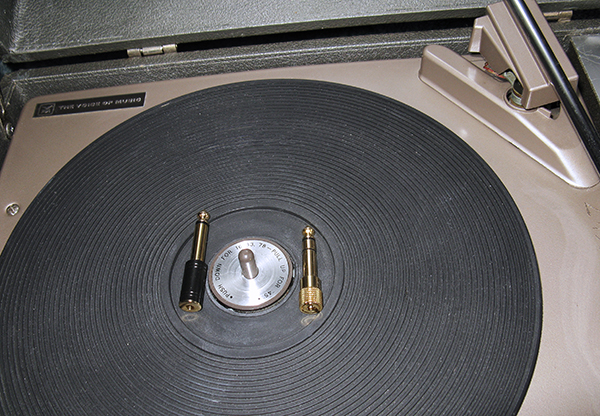
The adapter on the right is a normal stereo adapter (2 black bands). The one on the left is a mono adapter (1 black band) that would be needed if stereo headphones were to be used on this unit, otherwise sound will only come out of one side of the headphone set.
1971 Voice of Music A/V 216-3 Classroom Record Player
A collection of images from a reconditioned and modified 4 speed record player. Plays 78, 45, 33 1/3 and 16 speed records. Has been retro fitted with a magnetic cartridge and active internal phono preamp and sounds quite loud and very clear. Tracks at a modest 3.1 grams. Also has a built in 45 adapter.
The camera flash makes the unit look more dusty or dirty than it really is. You can zoom in on the images if you mouse over them. During autoplay zoom is disabled.
Valued in the range of $300 - $350.