
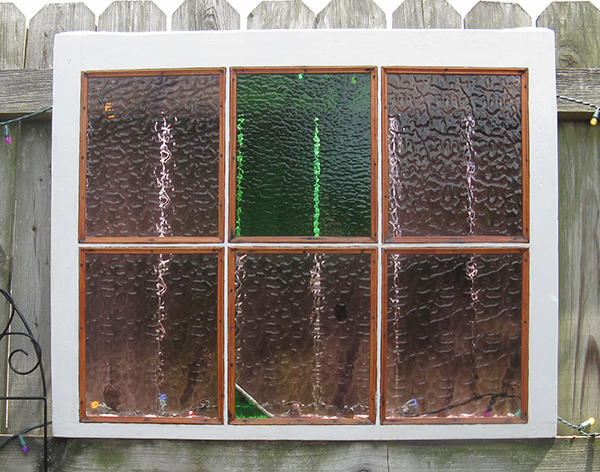
Have owned this piece of trash for more than 15 years and never found a suitable replacement for the missing stained glass pane. After 15 hours of work and about $120 in materials the resulting sash is in incredible condition. Could you imagine putting this much effort and money into a whole house full of windows? Probably cost $60,000 for a house with 20 windows. Keep in mind you have to deal with the window casing and frame too.

This is the interior side after some scraping and sanding.
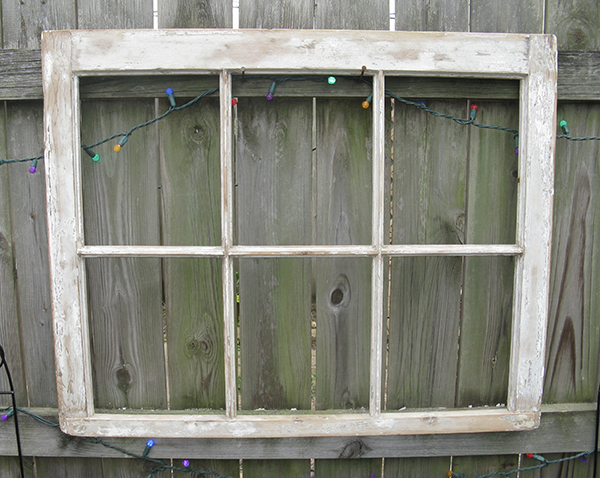
This is the interior side after more scraping, sanding and paint remover. Not much difference as it appears.

This is the exterior side after scraping, sanding and paint remover.

This is the exterior side after more scraping, sanding and paint remover. It is incredible how tough this old oil paint is. Care needs to be taken since it contains lead.

The wood happens to be in really good shape, but what kind of wood is it? Probably Douglas Fir (pinkish hue), but it could be Southern Yellow Pine (yellowish hue).
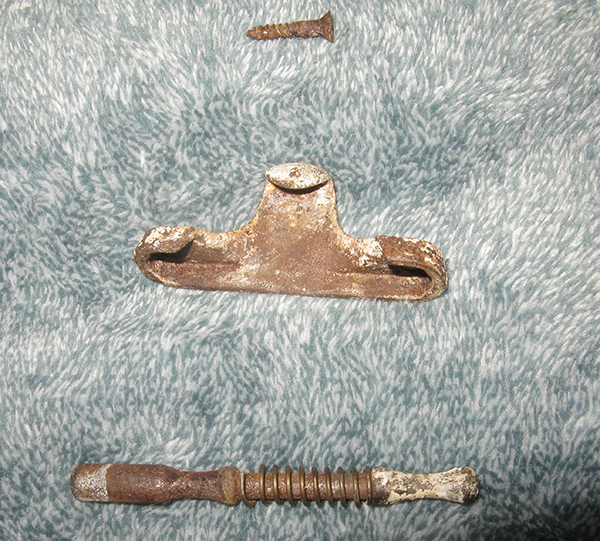
This is after most of the paint was stripped away. Painters will slop paint on anything that has paint on it originally. Never let them do this to you. Your painting contract should be quite explicit as to what should not be painted; otherwise, you may not ever get your windows or door to open without a pry bar.
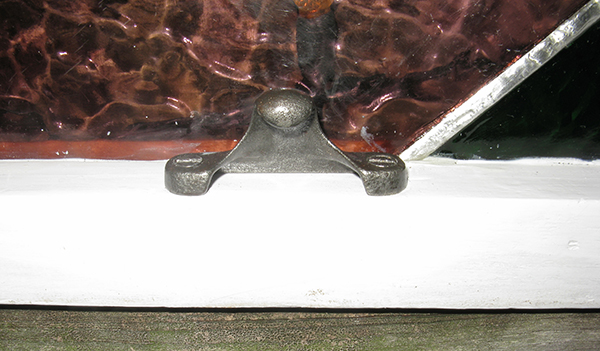
After much work this is what a cast iron window lock should look like. In this particular case it was clear coated. In a reality type situation, sending the hardware off to be nickel plated would be the best if not the most expensive way.

Have never seen a cast iron piece of window hardware that had no electroplating on it. This must have come from a really old window ... and it did.

The top sash would actually be able to move like the bottom sash and as a result needs a lock to keep it in position without falling.

Not sure why it is at at angle. Perphaps for ease of movement.

Window sash cord is cheap and lasts for about 20 years. This cord has been impregnated with mink oil since the window sash is on display in an outdoor setting.

Normally windows are glazed to keep the panes of glass in place. In this particular case trim pieces were cut into a frame and nailed against the glass. The reason for this is because the antique stained glass is worth more than the sash and did not want to break any glass when and if removal was desired.
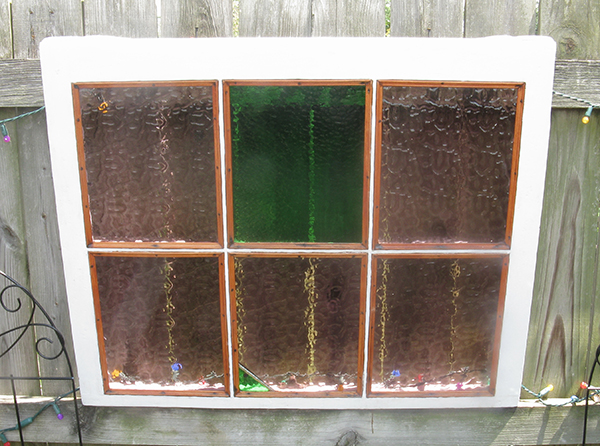
When removing glass and not wanting anything to break a razor blade cut around the entire perimeter of the window pane a few times will make it a lot easier to remove glass without breaking it. The key is to be very patient and absolutely no pressure on the glass. It should just about fall out on its own if done properly.

Unfortunately, one of the originl pieces of glass broke when attempting to remove and was repaired using a Tiffany style copper foil tape and solder. Normally this would be frowned upon in an exterior application. In this particular case it works because of the technique used to glue it into place.

Waterproof glue was used to seal off the trim pieces so water cannot seap in. On the other side white water based caulk was used for the same reason. The results yielded window panes that are very tight and do not rattle at all.
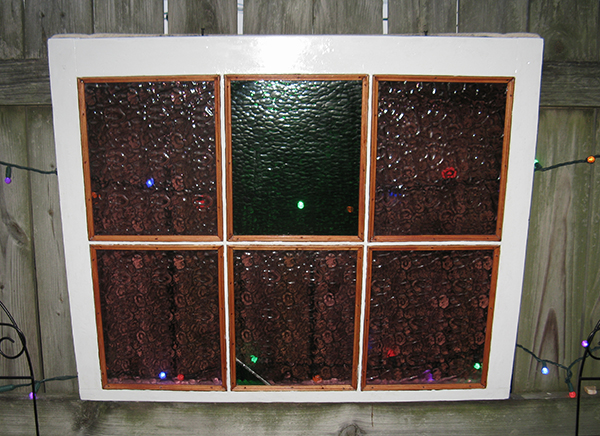
Not sure how long the UV resistant clear coat on the trim pieces will last since this window has seen a lot of rain and direct sun light. Worst case scenario the wood finish could be painted with an oil paint just like the rest of the window frame.

This window sash is part of a 6 over 6 or 6 over 1 type window. Meaning 6 panes in the top sash and 6 panes in the bottom as a Victorian window probably goes. Edwardian windows would probably be 6 over 1 meaning the bottom sash is one big piece of glass with 6 panes on the top sash.
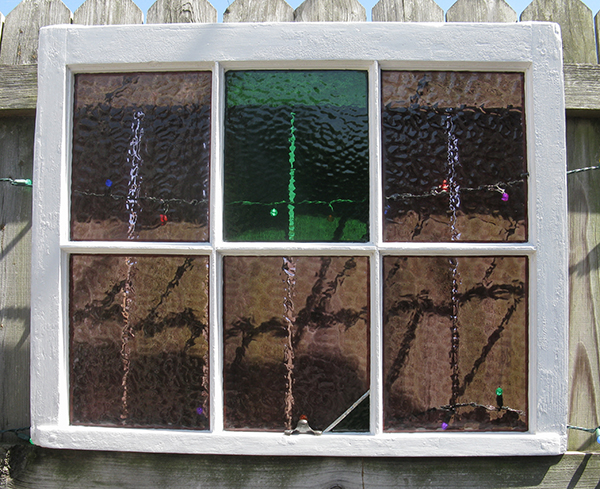
Don't know why the window sash looks bowed at the bottom. It is not. Each of the corners of the sash have wood pegs that have been gently tapped out and re-glued with water proof glue. Same can be said for the mortise joints. The sash is quite solid, yet for all the work that was done it doesn't look all that great. More sanding and painting would be needed to make it more furniture quality.
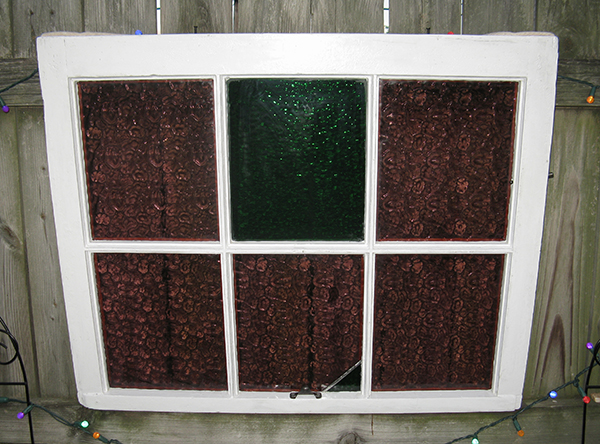
The original stained glass is a combination of purple and brown. Looks very different depending on how bright the sun is shining.

The original staned glass is thicker than stained glass bought today and as a result a couple of the new pieces broke while attempting to fit into the window. Very annoying since great care was taken.
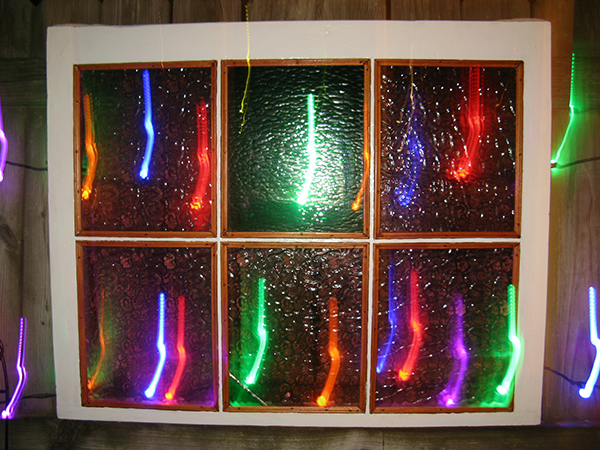
Not sure how this effect with the lights were captured by the camera, but couldn't resist keeping the photo.
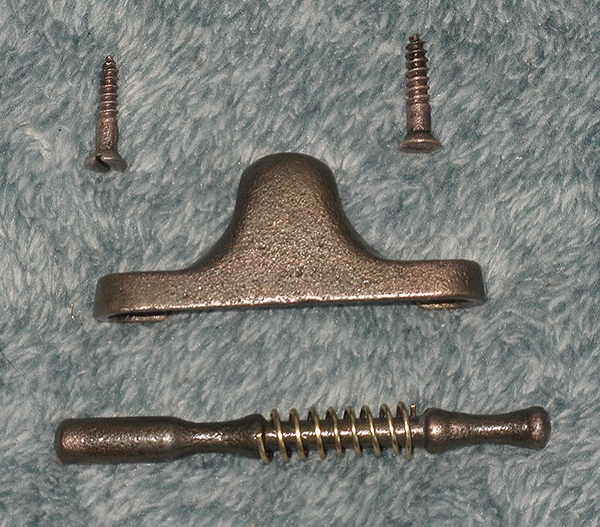
After a few weeks of hard htting rain and 100 degree sunlight corrosion started to develop on the screws and cast iron pieces. Has been nickel plated since then and the results are acceptable, but not great. The finish looks more like a light bronze rather than nickel plating.
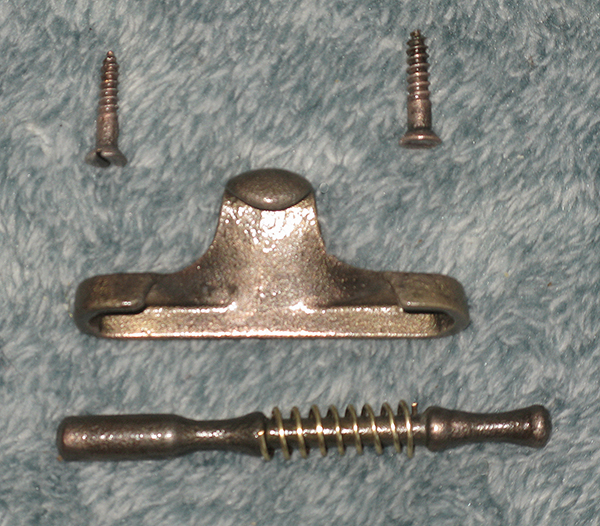
The pieces were clear coated after the electro-plating. Perhaps they won't rust so easily.

This is another sash that was found in the trash and is suitable to be matched with the top sash in this gallery. Some carpentry work would be required.

In spite of the peeling paint this window sash is in pretty good shape. Probably made somewhere between 1920 and 1935.

The hole below the lock is used as part of a security device that has a screw with a special head to keep the window from opening.

The wood color looks a lot like Douglas Fir, but hard to tell with a sash that is about 100 years old. Could be Southern Yellow Pine.

The wood color looks a lot like Southern Yellow Pine, but hard to tell with a sash that is about 100 years old. Could be Douglas Fir.
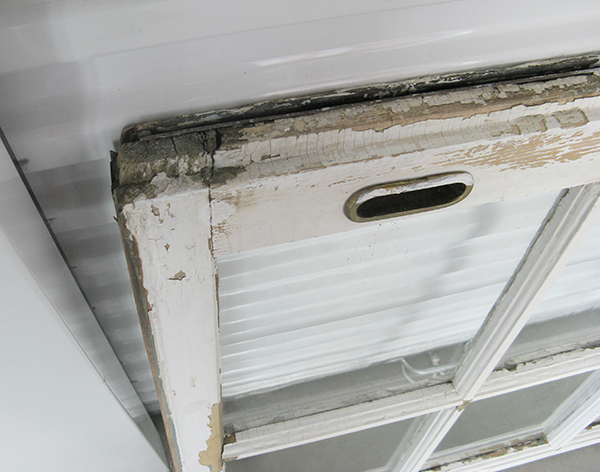
The window pull seen here is solid brass and surprisingly substantial. It looks like something from the late 1940's or early 1950's. Possibly a reproduction.

The sash has metal trim pieces that fit into the channels that surround the outer part of the sash as a way for the window sash to lock into the other sash to be more energy efficient. Not sure that was a thing in the 1920's.
Antique Window Sash, Circa 1907
A collection of images from an antique mortise and tenon/pegged stained glass window sash. Not exactly a housewares item but rather part of a house.
Found in the trash more than 15 years ago. Only one piece of the original glass was missing and one piece broke off at the corner when attemping to remove from the frame.
Top Sash Size (± 1/16 inch) : 28 1/16 inches tall x 34 7/8 inches wide, window pane opening 10 1/8 x 12 inches
Bottom Sash Size (± 1/16 inch) : 32 1/16 inches tall x 34 5/8 inches wide, window pane opening 10 1/8 x 13 15/16 inches
The flash from the camera makes the piece look brighter than it normally would. You can zoom in on the images if you mouse over them. During autoplay zoom is disabled. Shrinking the browser window will shrink its contents possibly making it easier to view the gallery.
Valued in the range of $300 - $400.